Naya Health / Chronic fatigue & Long COVID · Marylebone, London
Your energy shouldn’t run out by lunchtime.
rTMS for Chronic Fatigue Syndrome: Where Neural Circuits Are Restored and Rewired · London
Chronic fatigue is neurological. The circuits driving it can be restored.
In conditions such as ME/CFS, post-viral fatigue and long COVID, persistent fatigue reflects a state of disruption deep in the brain’s regulatory systems: the pathways that govern effort, attention, autonomic function and recovery. These systems can become held in neural patterns that resist change long after the original trigger has resolved.
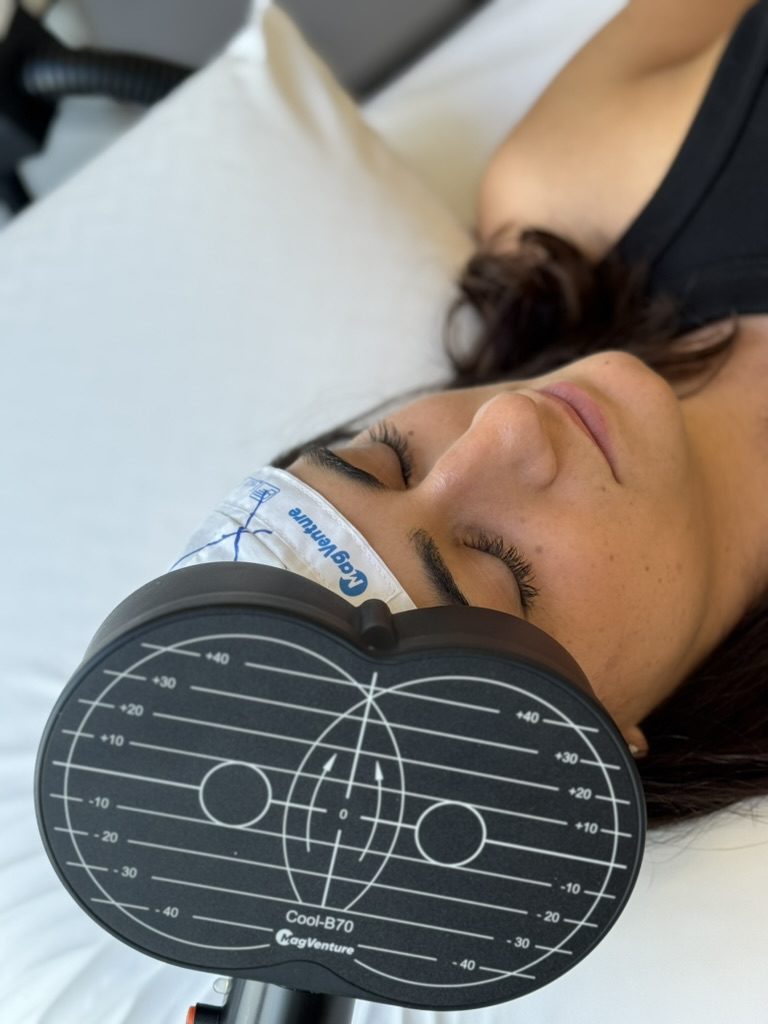
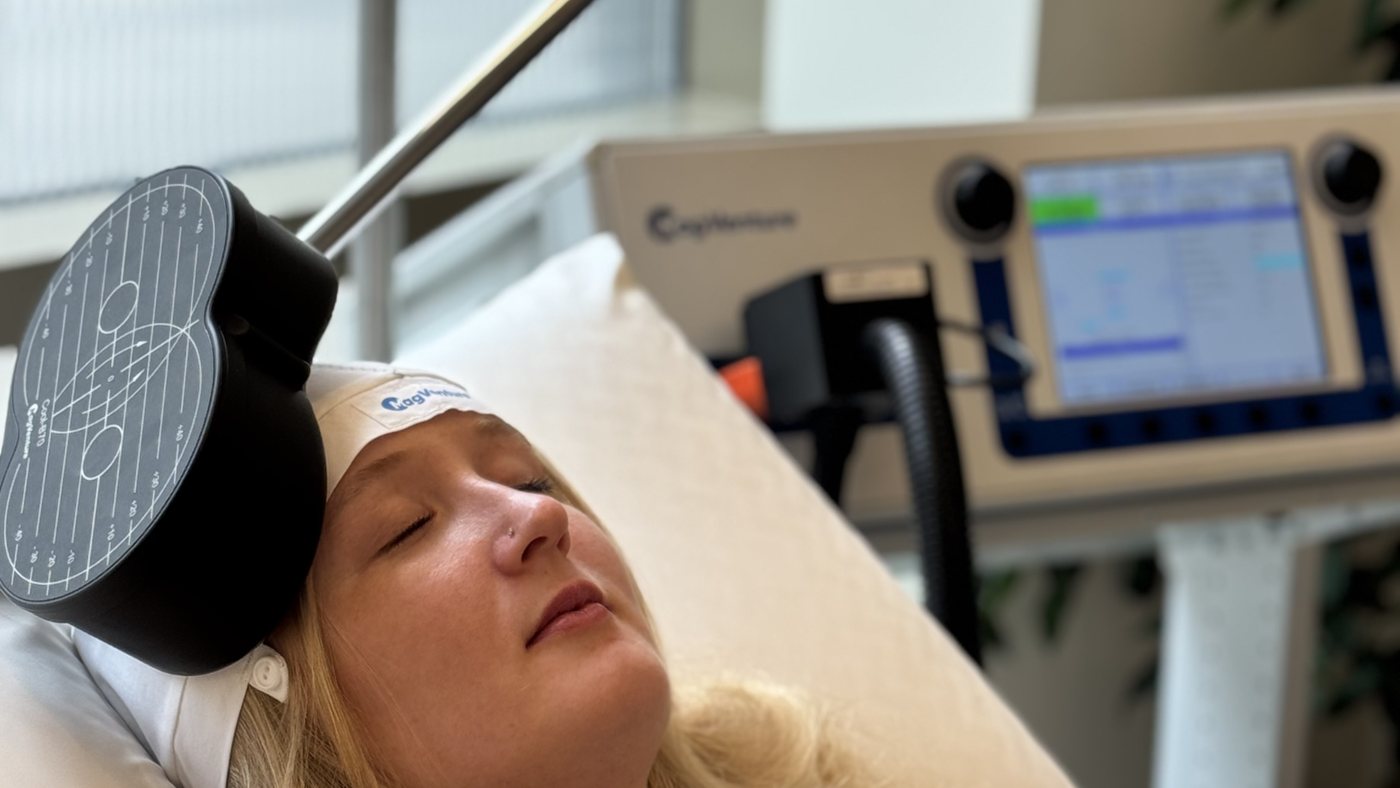
At Naya Health, we use precision rTMS to work gently and directly at those pathways, delivering targeted magnetic pulses to the prefrontal circuits involved in effort regulation, cognitive endurance and autonomic recovery. Non-invasive, drug-free, and guided by objective measurement throughout.
Consultant-psychiatrist ledOne small clinical team
Heart-brain couplingPersonalised targeting
Your first step
Book your complimentary discovery call with one of our clinicians
A 30-minute conversation with one of our specialist clinicians about what you're dealing with, what's been tried, and whether rTMS could help. No obligation, and if it's not right for you, they'll tell you.
Naya Health is a CQC-registered precision brain health clinic in Marylebone, London. We work with people experiencing persistent fatigue in the context of ME/CFS, post-viral fatigue and Long COVID, typically after other physical causes have been ruled out, using drug-free rTMS guided by NayaScore™, our own brain health assessment. Your first call is free.
Who it’s for
Does this sound familiar?
Your energy runs out well before the day does, and rest doesn’t top it back up.
Brain fog makes it hard to find words, hold a thought, or follow a conversation.
Every test has come back normal, and you’re starting to doubt yourself too.
You’ve been told it’s stress, or to pace yourself, and it hasn’t touched how you actually feel.
Post-exertional crashes mean one good day is often followed by several bad ones.
If any of these feel familiar, a free call is a good place to start. You don’t need a GP referral.
What Naya patients report
93%would recommend Naya
77%report their symptoms improved
81%report a better quality of life
82% of our patients with CFS, post-viral fatigue or Long COVID report improved symptoms and quality of life, and 91% would recommend Naya.
From Naya patients we’ve followed up with, 2026. Everyone’s experience is different.
Rewiring energy
When signals feel sluggish, stimulation can help networks communicate more freely.
Where we work
Different areas. Different roles.
Mood, worry, focus and pain each lean on different brain networks. Your assessment and heart-brain coupling help decide where we stimulate.
Cognitive performance
Part of the networks behind self-focus, planning and attention.
An illustration, not a scan. Your clinician explains the evidence for your condition.
Heart-brain coupling: your heart's response helps confirm the target.
Precision rTMS for chronic fatigue in London
At Naya Health, we use precision rTMS to restore and regulate the neural circuits underlying chronic fatigue
Chronic fatigue is neurological. The circuits driving it can be restored.
In conditions such as ME/CFS, post-viral fatigue and long COVID, persistent fatigue reflects a state of disruption deep in the brain’s regulatory systems: the pathways that govern effort, attention, autonomic function and recovery. These systems can become held in neural patterns that resist change long after the original trigger has resolved.
At Naya Health, we use precision rTMS to work gently and directly at those pathways, delivering targeted magnetic pulses to the prefrontal circuits involved in effort regulation, cognitive endurance and autonomic recovery. Non-invasive, drug-free, and guided by objective measurement throughout.
Read more
For those who have carried chronic fatigue without finding a way through, Naya offers something different: precision neuromodulation at the neural root. rTMS treatment for chronic fatigue, available at our London clinic.
Non-invasive, drug-free, and guided by objective measurement throughout.
For those who have lived with chronic fatigue without finding lasting relief, Naya offers something different: precision neuromodulation, rewiring the brain at its root.
Discuss rtms at £0 cost to you
A precision rTMS clinic in London
A CFS Specialist Clinic Built on Precision rTMS · London
One team, one plan. You explain yourself once, on your free call, and your clinical team carries it from there.
Naya Health is a precision neuromodulation clinic based in Marylebone, London. We work with patients experiencing persistent fatigue in the context of ME/CFS, post-viral fatigue, long COVID brain fog and chronic fatigue. Those who come to us have typically been screened for other physical causes. Where no physical cause of fatigue symptoms is present, persistent fatigue can indicate nervous system dysregulation at the neural level.
Your treatment is led by expert clinicians and consultants, alongside a specialist team of neuromodulation practitioners. Each protocol is personalised, mapped to your NayaScore™ baseline, and refined with care throughout your programme.
Read more
Chronic fatigue has a neurological root. The regulatory circuits driving it can be restored.
Every presentation
rTMS for Chronic Fatigue: Precision Neuromodulation for Every Presentation
Find the presentation that sounds most like you. Open each card for the detail.
ME/CFS: persistent fatigue at the neural level
Debilitating fatigue, post-exertional malaise, unrefreshing sleep and cognitive difficulty.
Read more
Myalgic encephalomyelitis and chronic fatigue syndrome involve debilitating fatigue, post-exertional malaise, unrefreshing sleep and cognitive difficulty. At their neurological core, these conditions involve nervous system dysregulation: the brain’s activity becomes locked into patterns that do not readily ease after physical or cognitive exertion.
Precision rTMS works at the prefrontal pathways involved in effort, attention and autonomic recovery. Emerging evidence, including a study by Miwa and Inoue (2023), supports rTMS as a well-tolerated intervention associated with meaningful reductions in fatigue severity in ME/CFS. Each protocol at Naya is personalised to your NayaScore™ baseline and refined throughout your chronic fatigue treatment at our London clinic.
Post-viral fatigue and long COVID brain fog
Persistent brain fog and fatigue after viral illness, long after the acute infection has resolved.
Read more
Post-viral fatigue and long COVID can produce a pattern of persistent brain fog, fatigue and disruption that shares significant overlap with ME/CFS. The underlying mechanism is likely neurological: viral illness can disturb the brain’s regulatory pathways in ways that persist long after the acute infection has resolved.
At Naya, precision rTMS works at the prefrontal pathways involved in cognitive regulation, attention and autonomic recovery, offering a clinically grounded approach to brain fog treatment in the context of long COVID and post-viral fatigue. NayaScore™ maps your cognitive and regulatory baseline precisely before treatment begins, tracking how your brain is restoring and rewiring across your programme.
Chronic fatigue without a clear diagnosis
Persistent, disabling fatigue even after appropriate medical investigation.
Read more
For those living with persistent, disabling fatigue that has not resolved following appropriate medical investigation, and where no physical cause has been identified, rTMS may be a considered option. Where fatigue is accompanied by cognitive difficulty, sleep disruption and reduced tolerance for exertion, precision neuromodulation can work at the neural root of those patterns, within a carefully designed and individually monitored programme at our London clinic.
Chronic fatigue alongside fibromyalgia and depression
Fatigue, pain and low mood can reinforce one another. We work across their shared pathways.
Read more
Chronic fatigue syndrome, fibromyalgia and depression frequently coexist, and the overlap is not coincidental. They share underlying neural circuits involved in pain processing, mood regulation, autonomic function and the regulation of effort and recovery. For many people, these conditions reinforce one another: fatigue deepens low mood, pain disrupts sleep , and depression lowers the threshold at which both are felt.
Naya’s precision neuromodulation approach works across these shared pathways, with each protocol personalised to your individual presentation. If you are experiencing fibromyalgia or depression alongside chronic fatigue, these can be addressed within the same treatment pathway. See also our dedicated pages on fibromyalgia and chronic pain and on depression for more on how Naya approaches each condition.
What the evidence says
Our results, then the research
Our patients
82% of our patients with CFS, post-viral fatigue or long COVID report improved symptoms and quality of life, and 91% would recommend Naya.
The research
A growing field. In a 2023 study, 67% of people with ME/CFS improved on daily-living scores.
Our figures come from an early, growing patient dataset, not a controlled trial. Individual results vary, and your clinician will check if rTMS could be suitable for you.
NAYASCORE™ IS PROPRIETARY TO NAYA HEALTH AND UNAVAILABLE AT ANY OTHER CLINIC
Objective measurement
NayaScore™: Objective Measurement at Every Stage of Your Chronic Fatigue Treatment
See what changes, with a baseline that is personal to you.
01
Personalised targeting
Your rTMS protocol is mapped to the specific pathways involved in your presentation, ensuring stimulation is targeted and carefully calibrated to your individual neurology.
02
Track your progress
As your chronic fatigue treatment progresses, NayaScore™ tracks how your brain is restoring and recalibrating, giving you a clear, measurable picture of what is shifting across your programme.
03
Joined-up care
Your NayaScore™ data is visible to your wider clinical team, whether that is your GP, specialist or therapist, creating a joined-up view of your brain health and treatment progress.
04
A longer view
NayaScore™ tracks your cognitive baseline across months and years, so that subtle changes are noticed early and responded to with care and precision.
Read more
Chronic fatigue is deeply individual in how it presents and how it shifts. NayaScore™ brings objective measurement to that picture, drawing on heart rate variability, cognitive function, metabolic markers and clinical assessment to build a precise baseline that reflects where your brain currently is, and what it needs.
Tracked throughout your chronic fatigue treatment in London, NayaScore™ gives you and your clinical team a clear, longitudinal view of how your brain is restoring and rewiring, what is changing beneath the surface, and where it is heading.
the role of precision rtms in treatment outcomes
CQC-registered clinic (at Until, Marylebone)
8,000+ treatments delivered by our practitioners
Clinical team led by a consultant psychiatrist
Marylebone, next to Selfridges
As featured in
Precision, made personal
Your brain. Your heart. Your treatment.
Most clinics treat a standard spot. At Naya, we look for the target that fits you.
Heart-brain coupling uses your heart’s response to stimulation to help identify a target connected to the brain’s regulatory networks. Your clinical assessment and NayaScore™ baseline bring the wider picture into focus.
A targeting tool within your clinical plan, not a guarantee of a better outcome. Your clinician will explain the evidence for your condition.
Your rTMS Treatment for Chronic Fatigue: What to Expect
01
Step 1: A free conversation
A free 30-minute call with a clinician about what you’ve been living with and what you’ve tried.
02
Step 2: A doctor consultation
If rTMS looks right for you, you’ll speak with one of our doctors.
03
Step 3: Initial Consultation and Assessment
Every treatment journey at Naya begins with a NayaScore™ assessment, an objective, multi-domain measure of your brain health and how it is currently functioning.
04
Step 4: Your Personalised rTMS Programme
Based on your NayaScore™ baseline, your clinical team designs a precision rTMS programme specific to the pathways involved in your presentation.
05
Step 5: Ongoing Measurement and Next Steps
NayaScore™ builds a clear, longitudinal picture of how your brain is restoring and recalibrating throughout your programme.
Our clinic was designed to help you feel at ease, from the scent and temperature to music, or silence if you prefer. Tea, coffee and water are on hand, and you’re welcome to bring a friend or relative.
Nick · CFS/ME and chronic fatigue
“This has been a game changer. A rapid game changer. What fires together wires together: it changed the neural pathway, and enabled my system to operate again. I urge anyone who recognises this story to pick up the phone.”
Every person responds differently to rTMS, and Nick’s experience is his own. His story is not a promise of the same outcome for everyone, but it is a real and honest account of the difference it made for him.
“He told us he felt better able to handle stress, and more resilient when a low patch did arrive.”
Every person responds differently to rTMS. O.'s experience is his own, shared with his written permission, and is not a promise of the same outcome for everyone.
rTMS for Chronic Fatigue: Safe, Gentle, and Well Tolerated
Sessions are non-invasive and require no recovery time.
rTMS is extremely safe and one of the most well-tolerated approaches to chronic fatigue treatment available. For those with sensitised nervous systems, this is one of the most significant aspects of what precision neuromodulation offers. Sessions are non-invasive and require no recovery time. Where side effects occur, they are mild and transient, most commonly a mild headache or some fatigue on the night of treatment, easily addressed by adjusting session frequency.
Read more
The only clinically significant risk associated with rTMS is seizure, occurring in about 0.003% of sessions, or roughly 1 in 33,000 (a conservative figure). When one does occur, it is brief, stops on its own and leaves no lasting harm. It has never occurred at Naya Health. Thorough pre-treatment screening ensures any potential susceptibility is identified and addressed before treatment begins.
Simple pricing
One clear price, agreed up front
From £3,975 for the first ten sessions
or £662.50 a month for 12 months at 0% with Humm
Insured patients
Naya is recognised by WPA for every condition we treat. Other insurers by application; Bupa Global and Cigna consider every condition. We’ll support your application.
0% APR representative. Finance is provided by Humm. All applications are made directly with Humm and are subject to status and approval. You must be 18 or over and a UK resident.
The science, simply
Interested in the detail?
How rTMS may help with chronic fatigue, what the research shows, and how we find the right target for you. Each answer opens up if you’d like to read more.
How it works
Fatigue that persists is rarely simple. It reflects the brain held in neural patterns it cannot easily leave.
Precision rTMS works directly at those patterns.
Read more
In chronic fatigue syndrome and related conditions, the brain’s capacity to regulate effort, attention and recovery can become persistently disrupted following a physical or physiological stressor. The dorsolateral prefrontal cortex is central to this: the region that governs cognitive control, attention and autonomic regulation. When its activity is disturbed, the capacity to initiate, sustain and recover becomes consistently compromised.
TMS for chronic fatigue works at this level directly. Through gentle, repeated magnetic stimulation, it works to recalibrate activity at the neural root, supporting more adaptive responses to effort and more stable recovery over time. The aim is not to force activity, but to restore the brain’s own capacity to find its way back to regulation.
At Naya, target selection is guided by neurocardiac rTMS: measuring heart rate deceleration across multiple stimulation sites to identify the precise point of engagement for each individual’s frontal-vagal network. This level of personalisation matters particularly in chronic fatigue, where nervous system dysregulation is central to the condition and sensitivity to stimulation varies significantly between individuals.
Research
The Evidence
The evidence base for rTMS in chronic fatigue syndrome is emerging.
Read more
The evidence base for rTMS in chronic fatigue syndrome is emerging. A 2025 pilot study by Corlier et al. evaluated dual-target rTMS in ME/CFS patients, with those completing the protocol demonstrating improvements across all five symptom domains including fatigue, pain, mood, sleep and cognition. As with all emerging fields, larger controlled studies are needed, and at Naya protocols are carefully tailored and monitored to individual tolerance throughout.
Heart–brain coupling for personalised rTMS
The heart-brain connection: personalised rTMS guided by your biology
Your heart rate response helps us personalise where stimulation is delivered.
Read more
The pathways that govern effort regulation, stress response and autonomic recovery are closely connected to cardiac function. In chronic fatigue syndrome and related conditions, autonomic disruption is frequently present, and the heart provides a measurable, accessible window into how these systems are operating.
At Naya, we use this connection to guide precision rTMS. By measuring heart rate response across multiple stimulation sites, we identify the precise target that most effectively engages each individual’s frontal-vagal pathway. In chronic fatigue, where individual sensitivity varies significantly, this level of personalisation is particularly meaningful.1
Naya is currently the only clinic in the UK offering neurocardiac-guided rTMS.
To learn more, visit our dedicated heart-brain coupling page.
Your questions
Questions people often ask
How effective is rTMS for chronic fatigue syndrome?
The evidence base for rTMS in ME/CFS is emerging and encouraging. A 2025 pilot study by Corlier et al. found improvements across all five key symptom domains in ME/CFS, fatigue, pain, mood, sleep and cognition, following a course of rTMS. At Naya, protocols are carefully tailored and monitored throughout, with individual response guiding the programme at every stage.
Can rTMS help if my scans are normal but I still have pain or fatigue?
For some people, investigations and scans do not yield a clear answer. Where that is the case, persistent symptoms can sometimes reflect nervous system dysregulation at the neural level, something that imaging does not capture. At Naya, every patient is thoroughly assessed before beginning treatment to ensure rTMS is clinically appropriate, and our clinicians are well placed to advise whether it is likely to be a good fit for your presentation.
Can rTMS help with chronic fatigue alongside depression or pain?
Yes. Chronic fatigue, depression and chronic pain frequently coexist, sharing overlapping neural circuits in mood regulation, pain processing and autonomic function. The evidence base for rTMS in depression is particularly well established, and where depression presents alongside chronic fatigue, this strengthens the clinical case for rTMS treatment. At Naya Health in London, our precision neuromodulation approach works across these shared pathways, with each protocol personalised to your individual presentation.
Why does chronic fatigue affect sleep, and can rTMS help?
In ME/CFS and chronic fatigue, sleep is frequently unrefreshing despite adequate hours. This occurs because the brain's capacity for sleep regulation — governed by the same prefrontal and autonomic circuits disrupted in chronic fatigue — becomes dysregulated alongside effort and recovery. rTMS targets these shared pathways, and emerging clinical evidence supports improvements in sleep quality alongside fatigue and mood as part of rTMS treatment.
Is rTMS a temporary fix, or can it lead to long-term improvement?
rTMS works by driving neuroplastic change, gradually recalibrating the brain's regulatory pathways rather than simply suppressing symptoms. For many people, improvements persist well beyond the end of a course as the brain continues to consolidate change. For those whose symptoms return over time, top-up sessions may help to restore relief. Your clinical team at Naya will advise on whether a maintenance protocol is appropriate for you
How many rTMS sessions are typically needed for chronic fatigue?
A standard rTMS programme for chronic fatigue at Naya consists of between 10 and 20 sessions. Given the sensitivity often present in ME/CFS and post-viral fatigue, your clinical team may begin at a lower intensity and build gradually, which can influence overall programme length. Your NayaScore™ data tracks progress throughout, allowing your protocol to be refined in response to how your brain is restoring and recalibrating.
Can I get rTMS for chronic fatigue on the NHS?
Currently, rTMS for chronic fatigue is not routinely available on the NHS. It is available privately at specialist clinics including Naya Health in London. If you would like to explore whether rTMS is right for you, you can book a complimentary discovery call with one of our clinicians directly.
How does rTMS treat fatigue at the neurological level?
In chronic fatigue, the brain's capacity to regulate effort, attention and recovery can become held in neural patterns that resist change. The dorsolateral prefrontal cortex, the region governing cognitive control, attention and autonomic regulation, is central to this. rTMS delivers gentle, repeated magnetic pulses to that region, working to recalibrate activity at the neural root and supporting more adaptive responses to effort and recovery over time.
Will my insurance cover it?
Naya is recognised by WPA for every condition we treat. Other insurers, including Bupa Global and Cigna, consider cover by application; we can help you check your policy and guide you through the process; we provide itemised invoices and a doctor's letter to help.
Not sure if it’s right for you?
Book a Free Discovery Call
Tell us a little about where you are. A clinician will call, tell you more about rTMS and whether it could help. It’s free, and there’s no obligation.
Naya Health is not an emergency service. If you’re in crisis or thinking about harming yourself, call 999 if you’re in immediate danger, NHS 111 and choose the mental health option, or Samaritans free on 116 123, any time.