Naya Health / Headaches & migraine · Marylebone, London
You've lost too many days to a dark, quiet room.
rTMS for Migraines: Where Neural Circuits Are Restored and Rewired · London
Life gets planned around the next attack, not around what you'd rather be doing. You've likely tried preventative medication, acute treatments, or both, and they help, but only so far. The anticipation can be almost as draining as the migraine itself: wondering when the next one will take the day from you.
Migraine is a neurological condition, not something to simply push through. The brain's pain-processing pathways change over time in chronic migraine, and the threshold at which pain is triggered can lower. rTMS is a drug-free treatment that works on those pathways directly with gentle, targeted magnetic pulses. For some people it sits alongside their current medication. For others, it's where they choose to begin.
Ask whether rTMS could help me A free 30-minute call with a clinician. No cost, no obligation.Check if it’s right for me- WPA recognised; others by application
- 0% finance with Humm
- No GP referral needed
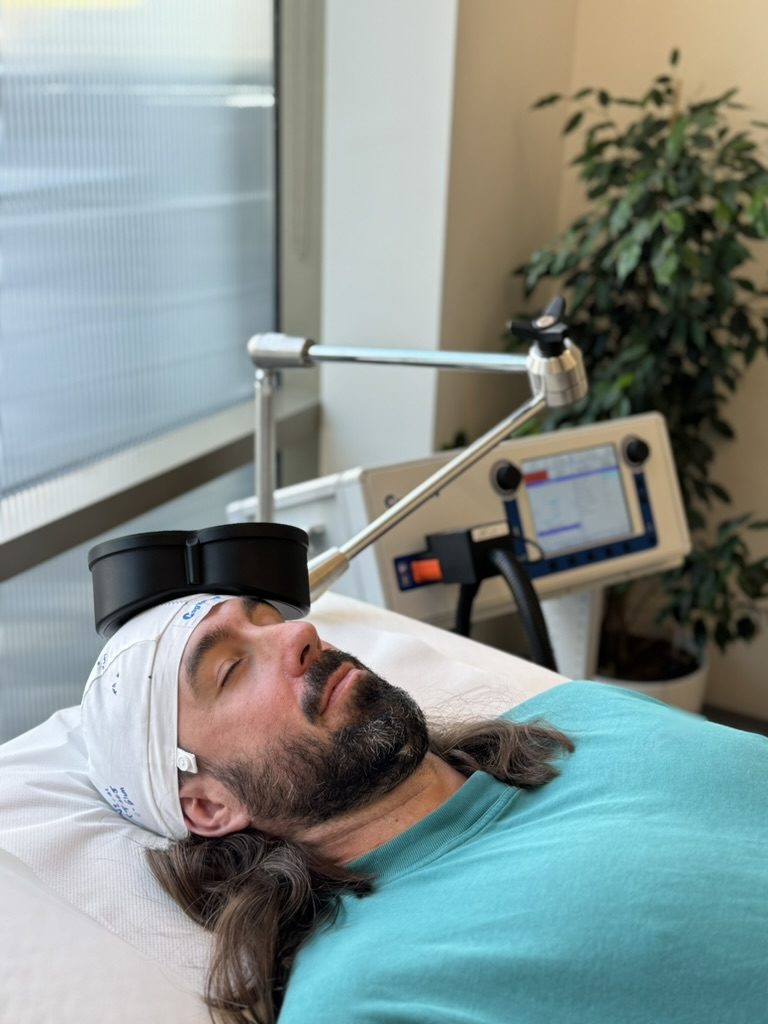
Your first step
Book your complimentary discovery call with one of our clinicians
A 30-minute conversation with one of our specialist clinicians about what you're dealing with, what's been tried, and whether rTMS could help. No obligation, and if it's not right for you, they'll tell you.
Prefer to pick a time yourself? Choose your free call time
Naya Health is a CQC-registered precision brain health clinic in Marylebone, London. We provide drug-free rTMS for chronic migraine and headaches, guided by NayaScore™, our own brain health assessment where relevant. Your first call is free.
Who it's for
Does this sound familiar?
If any of these feel familiar, a free call is a good place to start. You don't need a GP referral.
What Naya patients report
- 93%would recommend Naya
- 77%report their symptoms improved
- 81%report a better quality of life
86% of our patients with a pain-related condition report improved symptoms, a better quality of life, and would recommend us.
From Naya patients we’ve followed up with, 2026. Everyone’s experience is different.
Where we work
Different areas. Different roles.
Mood, worry, focus and pain each lean on different brain networks. Your assessment and heart-brain coupling help decide where we stimulate.
Chronic pain & migraine
A strip across the top of the brain. Stimulating it can change how pain signals are processed.
An illustration, not a scan. Your clinician explains the evidence for your condition.
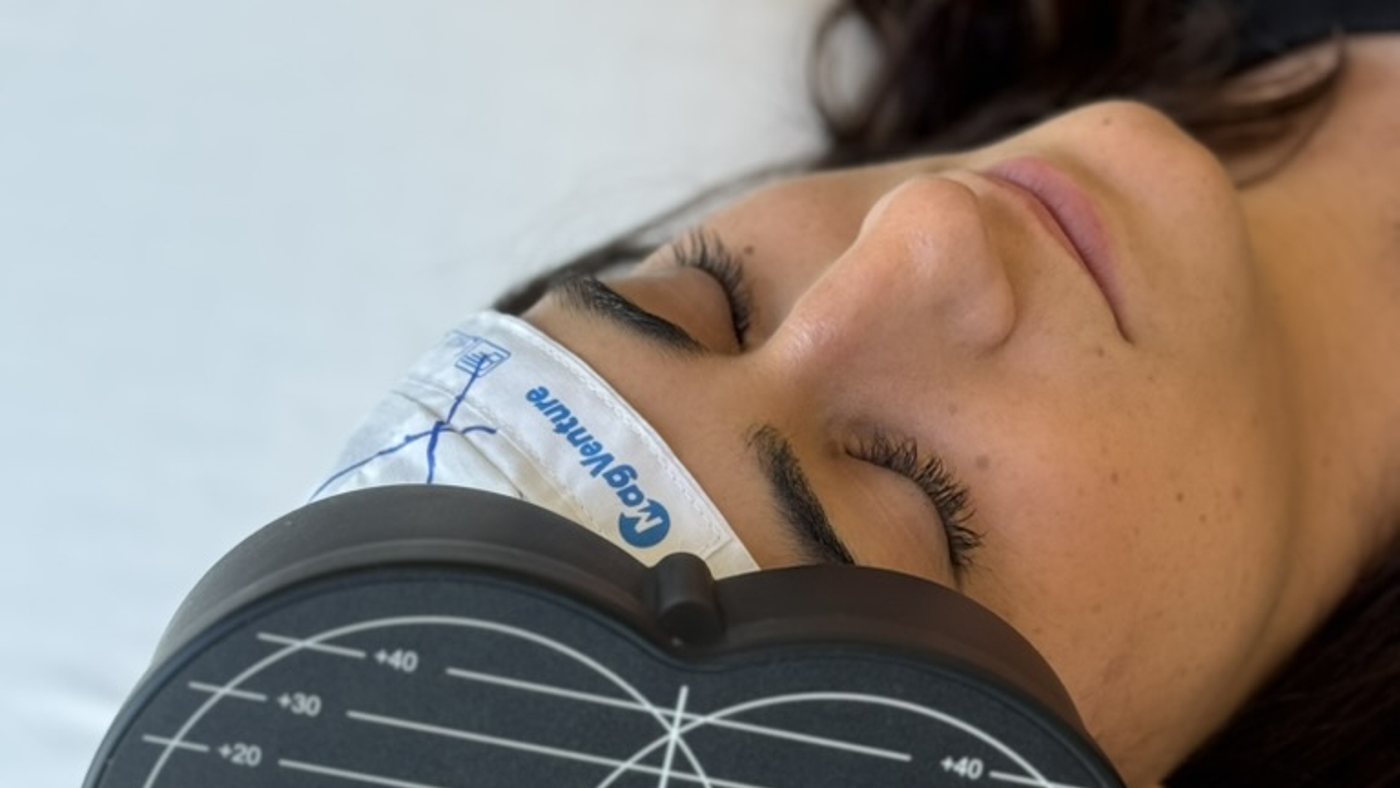
Precision rTMS for migraine in London
At Naya Health, we use precision rTMS to restore and regulate the neural circuits underlying migraine.
Chronic migraine has a neurological basis. The circuits involved can be recalibrated.
Migraine is a neurological condition. The pain, sensory sensitivity and cognitive disruption that accompany it reflect changes in how the brain processes and regulates pain signals.
At Naya Health, we use precision rTMS to work directly at the neural circuits involved in pain processing, mood regulation and sensory integration. Gentle, targeted magnetic pulses gradually recalibrate how the brain responds to and regulates pain. Non-invasive, drug-free, and guided by objective measurement throughout.
Read more
For those living with chronic migraine whose daily life has been shaped by the anticipation and aftermath of attacks, Naya offers a precision approach to the neural circuits involved.

We are a precision rTMS clinic in London
A Migraine Clinic Built on Precision rTMS · London
Migraine has a neural signature. The circuits driving it can be recalibrated.
Naya Health is a precision neuromodulation clinic based in Marylebone, London. We work with those experiencing chronic migraine, migraine with aura, and migraine presenting alongside mood disruption, anxiety or cognitive difficulty.
Read more
Migraine sits within a broader neurological picture. The circuits involved in pain processing, threat response and sensory regulation overlap significantly with those involved in mood, anxiety and cognitive function. At Naya, we work across those shared pathways, with each protocol personalised to your presentation and refined throughout your programme.
Several of our practitioners are osteopaths, and are able to assess and treat the muscular structures of the neck that can contribute to migraine via periphery magnetic stimulation (PMS), offering a more comprehensive approach to treatment alongside precision rTMS.
Your treatment is led by expert clinicians and consultants, alongside a specialist team of neuromodulation practitioners.
A quieter brain
Settling overactive pathways, one session at a time.
What the evidence says
Our results, then the research
Our patients
86% of our patients with a pain-related condition report improved symptoms and a better quality of life.
The research
A growing area. NICE allows TMS for migraine, and studies are ongoing.
Our figures come from an early, growing patient dataset, not a controlled trial. Individual results vary, and your clinician will check if rTMS could be suitable for you.
- CQC-registered clinic (at Until, Marylebone)
- 8,000+ treatments delivered by our practitioners
- Clinical team led by a consultant psychiatrist
- Marylebone, next to Selfridges





Precision, made personal
Your brain. Your heart. Your treatment.
Most clinics treat a standard spot. At Naya, we look for the target that fits you.
Heart-brain coupling uses your heart’s response to stimulation to help identify a target connected to the brain’s regulatory networks. Your clinical assessment and NayaScore™ baseline bring the wider picture into focus.
A targeting tool within your clinical plan, not a guarantee of a better outcome. Your clinician will explain the evidence for your condition.
Explore what makes Naya differentBrain networks Heart response
Not sure where to start?
Is rTMS right for me? Take the 1-minute check.
How it works
Your rTMS Treatment for Migraine: What to Expect
Step 1: A free conversation
A free 30-minute call with a clinician about what you've been living with and what you've tried.
Step 2: A doctor consultation
If rTMS looks right for you, you'll speak with one of our doctors.
Step 3: Initial Consultation and Assessment
Every treatment journey at Naya begins with a full clinical assessment, and where relevant, an objective, multi-domain measure of your brain health and regulatory capacity (NayaScore™).
Step 4: Your Personalised rTMS Programme
You will complete a series of sessions at our London clinic in Marylebone, each lasting around 30 minutes.
Step 5: Ongoing Monitoring and Next Steps
At the close of treatment, your clinician reviews your progress with you and recommends a path forward.
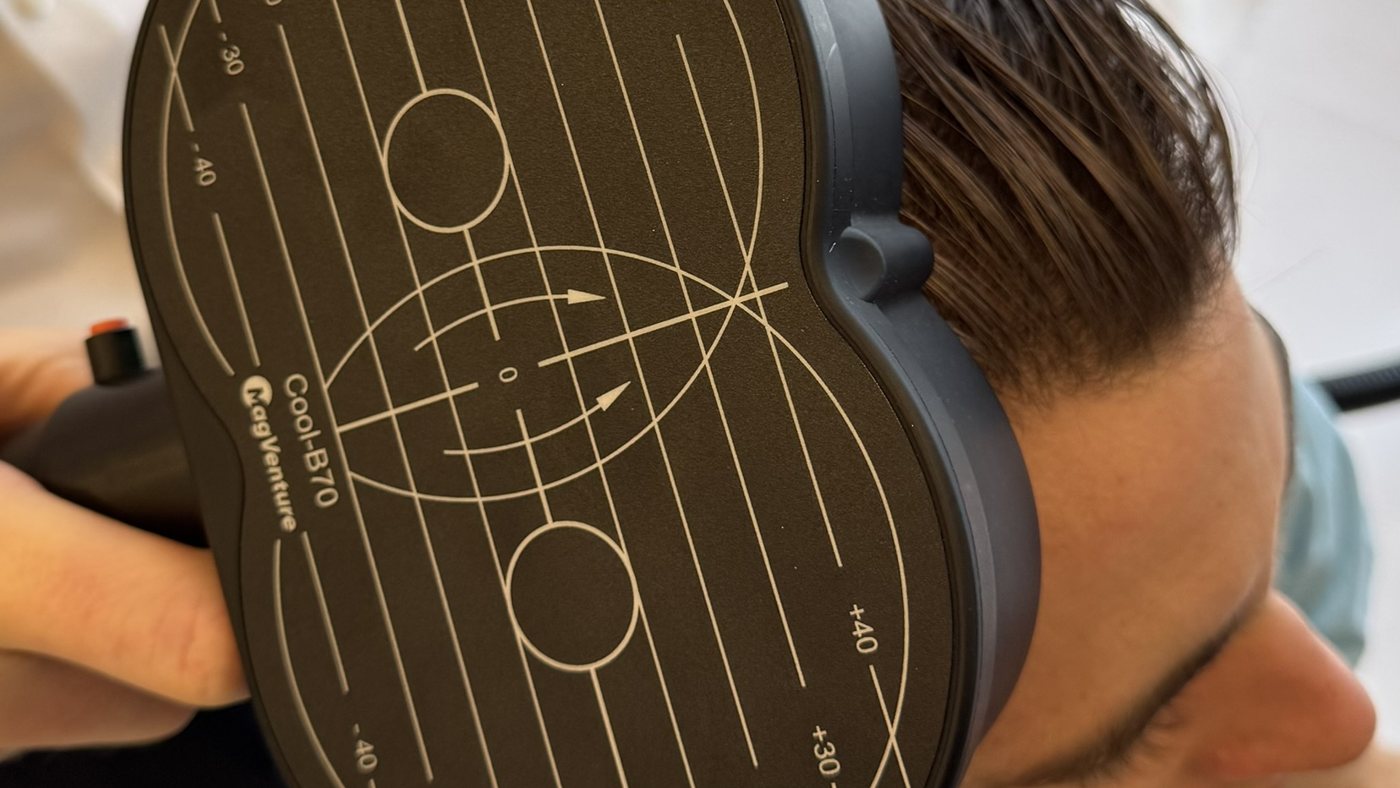
Jade · Migraine and long Covid
“I tried brain stimulation for chronic pain. Here's what happened.”
Every person responds differently to rTMS. Jade's experience is her own, shared with her permission, and is not a promise of the same outcome for everyone.
Read Jade’s story
Josh · Migraine
“The sense of impending disaster that I thought was normal life has lifted. It came at a time when I was really struggling, which has been really great. The team at Naya have been helpful, understanding, and easy to talk to.”
Every person responds differently to rTMS, and Josh’s experience is his own. His story is not a promise of the same outcome, but a real account of the difference it made for him.
Read Josh’s storyrTMS for migraine
rTMS for migraine: Safe, Gentle, and Well Tolerated
rTMS is extremely safe and one of the most well-tolerated approaches to migraine treatment available. Non-invasive and requiring no recovery time, sessions last around 30 minutes and leave daily life entirely undisturbed.
Where side effects occur, they are mild and transient. The most commonly reported is a mild headache on the night of treatment, easily addressed by adjusting session frequency.
Read more
The only clinically significant risk associated with rTMS is seizure, occurring in about 0.003% of sessions, or roughly 1 in 33,000 (a conservative figure). When one does occur, it is brief, stops on its own and leaves no lasting harm. It has never occurred at Naya Health. Thorough pre-treatment screening ensures any potential susceptibility is identified before treatment begins.
Simple pricing
One clear price, agreed up front
From £4,250 for 10 sessions
or £354.17 a month for 12 months at 0% with Humm
Your doctor may suggest a longer, 20-session course (two blocks of ten at £3,975). You’ll always know before you start.
Insured patients
Naya is recognised by WPA for every condition we treat. Other insurers by application; Bupa Global and Cigna consider every condition. We’ll support your application.
0% APR representative. Finance is provided by Humm. All applications are made directly with Humm and are subject to status and approval. You must be 18 or over and a UK resident.
The science, simply
Interested in the detail?
How rTMS works for migraine, what the research shows and how we approach treatment. Each answer opens up if you'd like to read more.
Precision migraine treatment · London
rTMS for Migraines: How It Works · London
Migraine is neurological. The brain’s pain-processing pathways can be gently recalibrated.
Read more
The neural basis of migraine is complex and still being understood. What is well established is that in chronic migraine, the brain’s relationship with pain signals changes over time, and the threshold at which pain is experienced can lower.
Precision rTMS works gently at the brain’s pain-processing pathways. Through repeated, targeted stimulation, it works to recalibrate these patterns gradually, with a growing body of evidence supporting rTMS for migraines as a safe, non-invasive approach to reducing attack frequency and intensity.
For some presentations, the same gentle magnetic pulses can also be delivered directly to the muscles of the neck and shoulders, addressing the musculoskeletal contributors to migraine alongside the neural ones.
Evidence
The Evidence
The evidence base for rTMS in migraine is emerging and promising.
Read more
The evidence base for rTMS in migraine is emerging and promising. A meta-analysis by Jiang et al. (2024), drawing on eight randomised controlled trials and 361 patients, found that high-frequency rTMS significantly reduced attack frequency, headache intensity and patient disability. At Naya, stimulation targets are selected based on each individual's specific presentation, ensuring treatment is precisely directed to the circuits most relevant to their experience of migraine.1
Your questions
Questions people often ask
Do the results last after treatment finishes?
For many people, the improvements from rTMS are lasting, as treatment works by gradually recalibrating how the brain processes and regulates pain rather than masking symptoms. How long the benefit holds varies from person to person. If your migraines do return over time, a short top-up may help to restore the benefit.
Can I have rTMS alongside my current migraine medication?
Yes, absolutely. rTMS can be delivered safely alongside your existing migraine medication, and many patients at Naya continue their usual treatment throughout. We would usually advise keeping your dose stable across your course, so that any changes can be attributed clearly to the treatment. Any decision to adjust medication is always made in consultation with your prescribing doctor.
How many rTMS sessions will I need for migraine?
Most people complete a course of between 10 and 20 sessions, each lasting around 30 minutes. With multiple sessions possible in a single day, some complete their course in as little as a week, while others spread treatment over several weeks. The exact number depends on your presentation and how your brain responds, and your clinical team will guide you throughout.
Is rTMS safe for migraine, and are there side effects?
rTMS is extremely safe and well tolerated. It is non-invasive, requires no recovery time, and leaves daily life undisturbed. Where side effects occur, they are mild and transient, most commonly a mild headache on the night of treatment, easily addressed by adjusting session frequency. The only clinically significant risk is seizure, occurring in about 0.003% of sessions, or roughly 1 in 33,000 (a conservative figure). When one does occur, it is brief, stops on its own and leaves no lasting harm. It has never occurred at Naya Health.
How does rTMS work for migraine?
The way rTMS is applied depends on what is driving your migraine. The underlying picture varies from person to person, for some it is closely linked to stress and mood, for others to vestibular or sensory processing, and for many it is a combination. Precision rTMS works at the pain-processing and regulatory pathways involved, using gentle magnetic pulses to recalibrate how the brain responds to and regulates pain over time. Because the drivers differ, a thorough assessment comes first, so your protocol can be directed to the pathways most relevant to your presentation.
Can rTMS reduce how often I get migraines?
For many people, yes. In a randomised controlled trial of patients with episodic migraine, rTMS reduced the average number of migraine days per month from 7.6 to 4.3, a significantly greater improvement than sham treatment. Around 42% of those treated responded, with meaningful reductions in both attack frequency and intensity. rTMS works at the pain-processing pathways involved in migraine, gradually recalibrating how the brain responds to and regulates pain. At Naya, each protocol is personalised to your specific presentation.2
Do I need a referral from my GP?
No. You can come to us directly, or your GP or neurologist can refer you, whichever is easier. Before any treatment starts, you'll have a consultation with one of our doctors to go through your medical history and make sure rTMS is right for you.
Will my insurance cover it?
Naya is recognised by WPA for every condition we treat. Other insurers, including Bupa Global and Cigna, consider cover by application; we can help you check your policy and guide you through the process; we provide itemised invoices and a doctor's letter to help.
Not sure if it's right for you?
You've carried this long enough.
Tell us a little about where you are. A clinician will call, tell you more about rTMS and whether it could help. It's free, and there's no obligation.
Naya Health is not an emergency service. If you're in crisis or thinking about harming yourself, call 999 if you're in immediate danger, NHS 111 and choose the mental health option, or Samaritans free on 116 123, any time.
Your enquiry goes directly to the Naya team. Or message us on WhatsApp.
Sources
- Jiang Y et al. Efficacy and safety of high-frequency rTMS for migraine: a meta-analysis of randomised controlled trials. Acta Neurologica Belgica, 2024. Eight RCTs, 361 patients.
- Leahu P et al. Increased migraine-free intervals with multifocal repetitive transcranial magnetic stimulation. Brain Stimulation, 2021. Double-blind, sham-controlled trial, 60 patients with episodic migraine.
This page is for information, not individual medical advice. Suitability, evidence and outcomes vary from person to person.
