rTMS for Depression: Precision Care at the Neurological Root in London
Depression has a neurological signature. The pathways driving it can be restored.
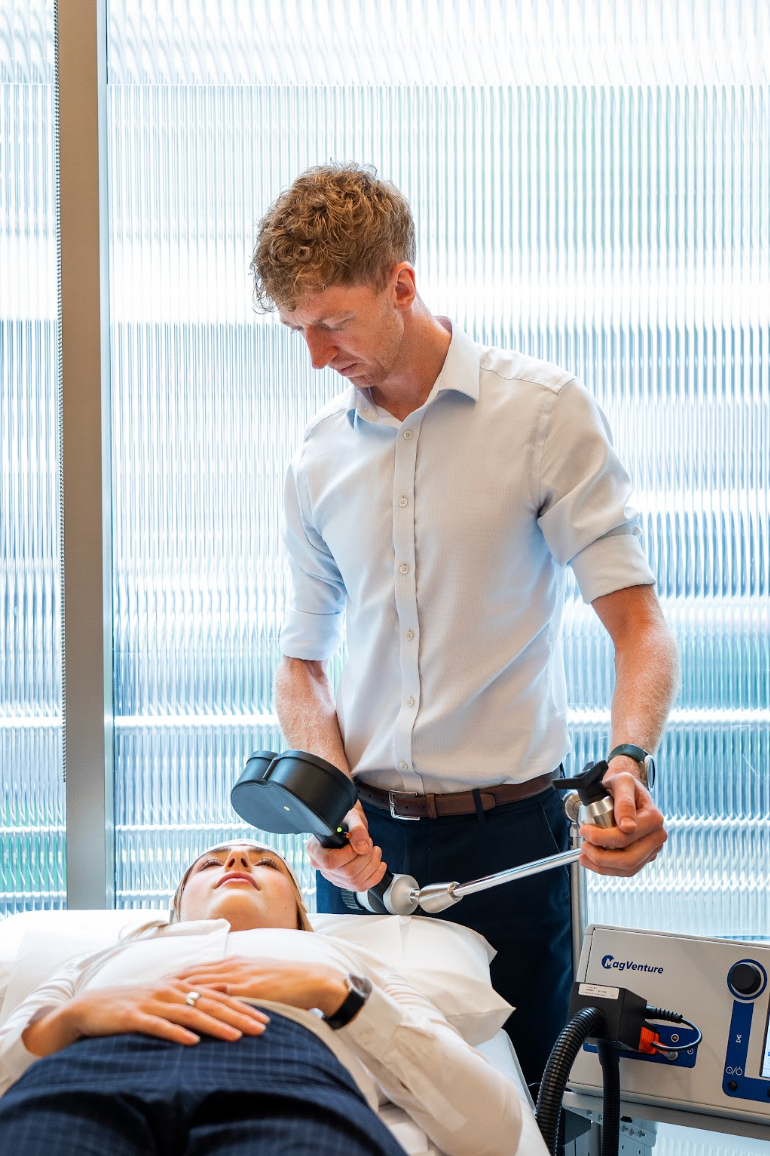
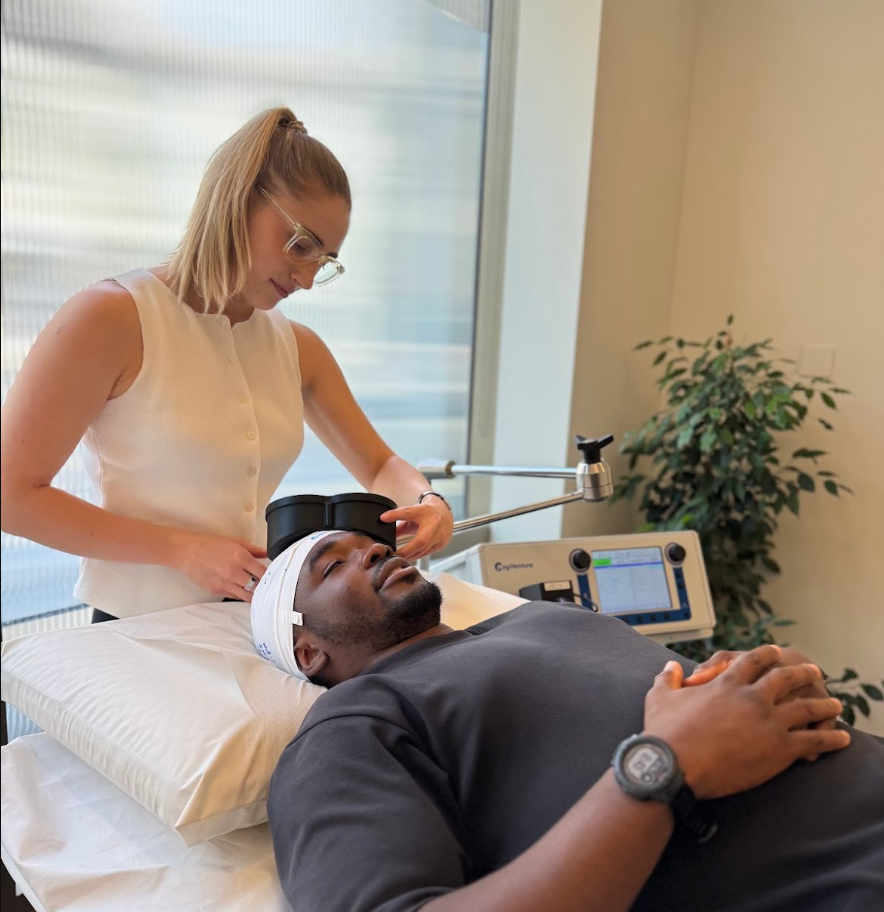
At Naya Health, we use precision rTMS to restore and regulate the neural circuits underlying depression.
Gentle, targeted magnetic pulses work directly at the neurological level, addressing the pathways driving low mood, fatigue and cognitive slowing at their source.
Recognised by NICE, drug-free, and guided by objective measurement throughout.
For those who have carried depression for longer than they should have had to, Naya offers something different: precision care at the neurological root.
Consultant-psychiatrist ledOne small clinical team
Heart-brain couplingPersonalised targeting
Your first step
Book your complimentary discovery call with one of our clinicians
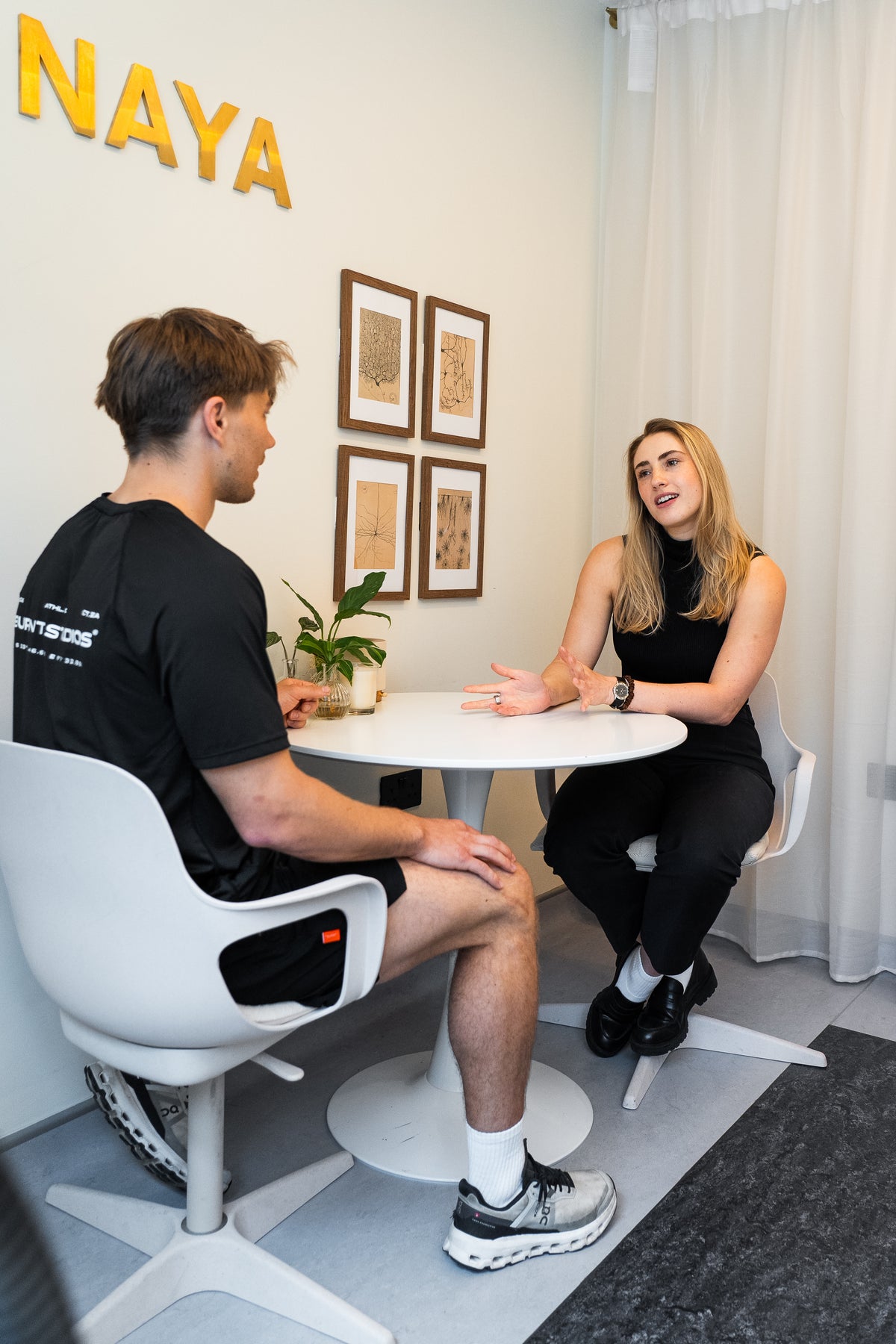
A 30-minute conversation with one of our specialist clinicians about what you're dealing with, what's been tried, and whether rTMS could help. No obligation, and if it's not right for you, they'll tell you.
Naya Health is a CQC-registered precision brain health clinic in Marylebone, London. We provide drug-free rTMS for depression, including treatment-resistant depression, guided by NayaScore™, our own brain health assessment. Your first call is free.
Who it’s for
Does this sound familiar?
You’ve tried one or more antidepressants, and they haven’t helped enough.
Side effects made you stop, or you’d rather not take medication at all.
Therapy has helped, but something still feels stuck.
You want to understand what’s happening in your brain, not just manage it.
If any of these feel familiar, a free call is a good place to start. You don’t need a GP referral.
What Naya patients report
93%would recommend Naya
77%report their symptoms improved
81%report a better quality of life
Every patient with a mood-related condition we’ve followed up with would recommend Naya, and 82% report a better quality of life.
From Naya patients we’ve followed up with, 2026. Everyone’s experience is different.
Neuroplasticity
Mood lives in networks. Networks can change.
Where we work
Different areas. Different roles.
Mood, worry, focus and pain each lean on different brain networks. Your assessment and heart-brain coupling help decide where we stimulate.
Depression
Often less active in low mood. Stimulating it is the best-studied rTMS approach for depression.
An illustration, not a scan. Your clinician explains the evidence for your condition.
Heart-brain coupling: your heart's response helps confirm the target.
Precision Depression Treatment · London
Depression has a neurological root. And a neurological path toward restoration.
Depression has a neurological signature. The pathways driving it can be restored.
Depression touches every dimension of how we think, feel and function. The circuits in the brain that govern motivation, energy, cognitive function and emotional regulation can become dysregulated, and for many people, difficult to fully address through medication or therapy alone.
Read more
TMS treatment for depression uses gentle, focused magnetic pulses to stimulate targeted regions of the brain, restoring balance to these circuits from within. Repeated sessions directly drive neuroplastic change, gradually rewiring patterns of low mood and cognitive slowing and restoring the brain’s capacity to regulate itself.
At Naya, every treatment is built around the individual. Target brain areas are guided by neurocardiac rTMS metrics and informed by each patient’s NayaScore™, an objective measure of brain health, ensuring stimulation reaches the precise circuits involved in their presentation. Before each session, NayaState™ prepares the brain and nervous system to receive treatment, optimising conditions for change.
A precision rTMS clinic in London
How we can treat Depression, including Treatment-Resistant Depression
The brain is plastic. It can be measured, rewired, and restored.
Naya Health is a precision neuromodulation clinic based in Marylebone, London. We work with a range of depressive presentations, from those seeking a drug-free, non-invasive alternative to antidepressants, to those living with treatment-resistant depression where medication has not brought lasting resolution.
Your treatment is led by expert clinicians and consultants, alongside a specialist team of neuromodulation practitioners. Each protocol is personalised based on your biometrics, mapped to your NayaScore™, and carefully refined throughout your programme.
Read more
TMS therapy for depression is recognised by NICE and supported by a substantial and well-established evidence base across depressive presentations. Gentle, non-invasive, and with minimal side effects, it works with the brain’s own capacity for change. Most patients complete up to 20 sessions.
The brain is plastic. It can be measured, rewired, and restored.
Why precision matters
Depression is one of the most common conditions in the world. Precision neuromodulation is changing what treatment can achieve.
For those who have carried depression for longer than they should have had to, Naya offers something different: precision care at the neurological root.
Read more
330 million people worldwide live with depression. Medication and therapy have an important role to play, and for many they bring meaningful relief. For others — particularly those finding antidepressants not working — a more precise approach to the underlying neural circuits is what makes the difference.
rTMS is a gentle brain stimulation treatment recognised by NICE for treatment-resistant depression in the UK, with an established and compelling evidence base across depressive presentations. At Naya, we combine that science with objective measurement at every stage, building a clearer picture of what is happening in the brain and refining treatment in response.
Every presentation
rTMS for Depression: Precision Care for Every Presentation
Find the presentation that sounds most like you. Open each card for the detail.
When antidepressants aren’t working
When lasting relief has stayed out of reach, there is a different route to consider.
Read more
For those who have tried medication, therapy, or both, and found that lasting resolution has remained out of reach, precision rTMS for depression offers a more direct route to the neural circuits involved. It is one of the most clinically grounded alternatives to antidepressants available — gentle, targeted, and guided by objective measurement throughout, working at the neural circuits underlying depression with a level of precision that complements and builds on what has come before.
For those seeking a drug-free approach to depression
You may want a way forward without medication or recovery time.
Read more
For many people, the opportunity to address depression without medication is itself meaningful. rTMS is gentle, non-invasive and very well tolerated, with no systemic side effects and no recovery time needed after sessions. It works directly and precisely at the neural circuits driving depression, leaving daily life entirely undisturbed. A clinically grounded approach to gentle brain stimulation for depression, built around you from the outset.
Depression alongside anxiety, chronic fatigue or chronic pain
When low mood is only part of what you are carrying.
Read more
Depression rarely exists in isolation. For those living with depression alongside anxiety, chronic fatigue syndrome, or chronic pain , Naya’s precision neuromodulation approach works across the shared neural circuits underlying these conditions. Each rTMS protocol is personalised, informed by NayaScore™ biometric data, and refined with care throughout your programme at our London clinic.
What the evidence says
Our results, then the research
Our patients
100% of the patients with a mood-related condition we've followed up with would recommend Naya. 82% report a better quality of life.
The research
NICE has recognised rTMS for depression since 2015, and the US FDA cleared it in 2008. Across 113 randomised trials, every main rTMS approach beat a dummy treatment.
Our figures come from an early, growing patient dataset, not a controlled trial. Individual results vary, and your clinician will check if rTMS could be suitable for you.
NAYASCORE™ IS PROPRIETARY TO NAYA HEALTH AND UNAVAILABLE AT ANY OTHER CLINIC
The role of precision rTMS in treatment outcomes
NayaScore™: Objective Measurement at Every Stage of Your Depression Treatment
Traditionally, brain health has been measured subjectively. NayaScore™ changes this, bringing objective, biological measurement to every stage of your depression treatment, tracking what is actually changing in the brain and nervous system as it unfolds.
01
Precision targeting
Your rTMS protocol is mapped to the specific neural circuits involved in your depression, ensuring stimulation reaches exactly where it is needed.
02
Objective evidence of change
As your treatment for depression progresses, NayaScore™ tracks how your brain is responding, giving you a clear, measurable picture of what is shifting across your programme.
03
A shared clinical picture
Your NayaScore™ data is visible to your wider clinical team, whether that is your GP, psychiatrist or therapist, creating a joined-up view of your neurological health and treatment progress.
04
A longitudinal record of your brain health
NayaScore™ builds over time, tracking your neurological baseline across months and years, so that changes are identified early and responded to with precision.
Read more
Drawing on heart rate variability, cognitive function, metabolic markers and clinical assessment, it builds a precise neurological baseline that reflects your brain’s regulatory capacity — a measurable foundation from which to restore, regulate and rewire.
Tracked and updated throughout your rTMS programme in London, NayaScore™ gives you and your clinical team a clear, longitudinal view of how your brain is responding, where it is heading, and what is changing beneath the surface.
NayaScore™: what objective measurement makes possible
CQC-registered clinic (at Until, Marylebone)
Recognised by NICE for depression
Clinical team led by a consultant psychiatrist
Marylebone, next to Selfridges
As featured in
Precision, made personal
Your brain. Your heart. Your treatment.
Most clinics treat a standard spot. At Naya, we look for the target that fits you.
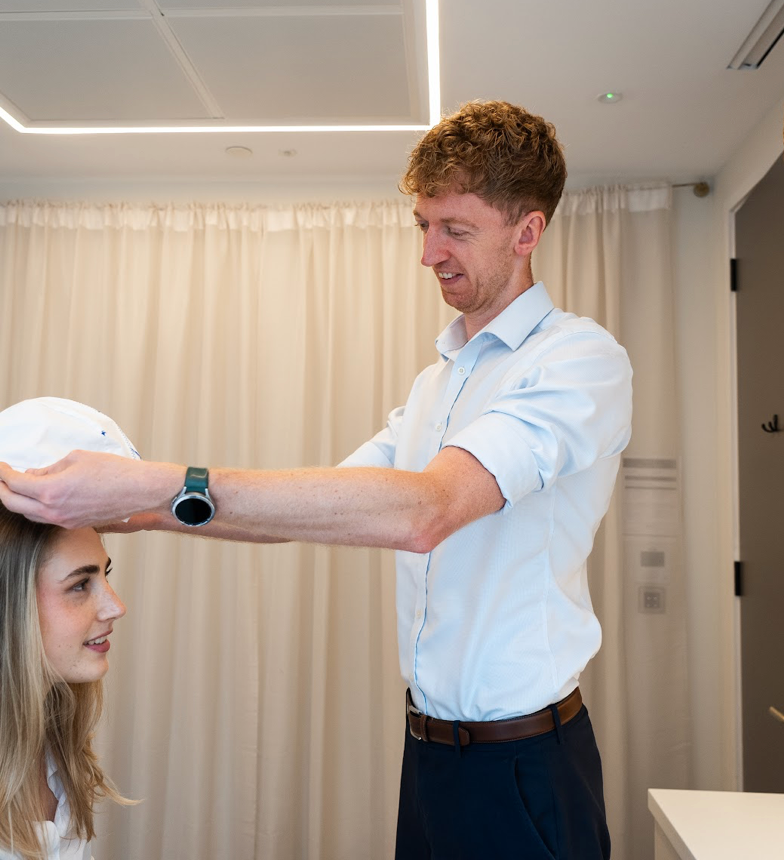
Heart-brain coupling uses your heart’s response to stimulation to help identify a target connected to the brain’s regulatory networks. Your clinical assessment and NayaScore™ baseline bring the wider picture into focus.
A targeting tool within your clinical plan, not a guarantee of a better outcome. Your clinician will explain the evidence for your condition.
Your rTMS Treatment for Depression: What to Expect
01
Step 1: A free conversation
A free 30-minute conversation with one of our specialist clinicians about what you’re dealing with, what’s been tried, and whether rTMS could help.
02
Step 2: A doctor consultation
If rTMS looks right for you, you’ll speak with one of our doctors.
03
Step 3: Step 1: Your rTMS Treatment for Depression: What to Expect
Your journey begins with a 30-minute complimentary online discovery call with one of our specialist clinicians, who will take time to understand your history, your experience of depression, and what you are hoping to achieve.
04
Step 4: Step 2: Your Personalised rTMS Programme
Based on your NayaScore™ baseline, your clinical team designs a precision rTMS programme specific to the neural circuits involved in your presentation.
05
Step 5: Step 3: Ongoing Measurement and Next Steps
NayaScore™ tracks how your brain is restoring and rewiring throughout your programme, giving you and your clinical team a clear, longitudinal view of progress.
Our clinic was designed by neuroscientists to help you feel at ease, from the scent and temperature to music, or silence if you prefer. Tea, coffee and water are on hand, and you’re welcome to bring a friend or relative.
A. · Depression
“My rTMS treatment has been extremely helpful in getting my health back, and the whole experience felt very personalised. Abigail made me feel at ease from the start. She was incredibly supportive, knowledgeable, and genuinely cared about my progress throughout.”
Every person responds differently to rTMS. A.'s experience is her own, shared with her written permission, and is not a promise of the same outcome for everyone.
rTMS has a well-established safety record. You don’t need an anaesthetic, there’s no recovery time, and you can go back to work and drive straight afterwards.
rTMS is extremely safe and one of the most well-tolerated approaches to treating depression available. For those who have experienced the side effect burden of antidepressants, this is one of the most significant aspects of what precision neuromodulation offers.
Read more
Where side effects occur, they are usually mild and transient. The most commonly reported are a mild headache on the night of treatment, or some fatigue, which can easily be addressed by simply reducing the frequency of sessions.
The only significant risk is a seizure, and it is very rare: about 0.003% of sessions, or roughly 1 in 33,000 (a conservative figure). When one does occur, it is brief, stops on its own and leaves no lasting harm. We have never seen one at Naya Health.
Before treatment starts, a clinician runs a full screen covering medical history, medication, metal implants and any personal or family history of epilepsy.
Simple pricing
One clear price, agreed up front
From £3,975 for the first ten sessions
or £662.50 a month for 12 months at 0% with Humm
If your doctor recommends a faster, accelerated course, it’s £6,350.
Insured patients
Naya is recognised by WPA for every condition we treat. Other insurers by application; Bupa Global and Cigna consider every condition. We’ll support your application.
0% APR representative. Finance is provided by Humm. All applications are made directly with Humm and are subject to status and approval. You must be 18 or over and a UK resident.
The science, simply
Interested in the detail?
How rTMS works, what the research shows and how we choose where to treat. Each answer opens up if you’d like to read more.
Evidence
The Evidence
Among the people we treat for low mood, every patient we've followed up with would recommend us. rTMS is recognised by NICE,1 and international guidelines give it their highest level of evidence for depression.2
The most striking research results come from personalised protocols. In a double-blind trial at Stanford (the SAINT approach), 12 of 14 people with treatment-resistant depression (86%) responded to a five-day accelerated course, and 79% were in remission four weeks later.4 Naya applies the same principle, choosing each person's target rather than using one standard spot, guided by heart-brain coupling.
Read more
How it compares with medication: when antidepressants work, they act on the whole body, so side effects such as tiredness, weight change, sleep problems or sexual side effects are common. rTMS acts on a specific brain network. Most people notice nothing more than a mild headache that settles quickly, and you can stay on your current medication during treatment.
Across clinics using standard rTMS, around 40 to 60% of people with depression respond, and around 25 to 40% reach full remission.3 Personalised targeting is designed to improve on that standard approach.
Research findings do not guarantee an individual outcome. You can read more in our research archive.
Finding your target
The heart-brain connection: personalised rTMS guided by your biology
Precision care of this kind means treatment is selected based on measurable physiological response, not protocol convention.
Read more
The relationship between the heart and the brain runs deeper than most people realise. The neural networks that govern mood, stress and emotional regulation are the same networks that control autonomic cardiac function. In depression, this system is frequently dysregulated, and the heart provides a measurable, accessible window into that state.
At Naya, we use this connection to guide precision rTMS. By measuring heart rate response across multiple stimulation sites, we identify the precise target that most effectively engages each individual’s regulatory brain network. Precision care of this kind means treatment is selected based on measurable physiological response, not protocol convention.
Naya is currently the only clinic in the UK offering neurocardiac-guided rTMS.
This technique, called heart-brain coupling, was developed by researchers including Prof Alexander Sack, Naya’s Scientific Advisor.5 We are the only clinic in the UK with an advisory relationship with Professor Sack and, through this partnership, currently the only UK clinic to offer it.
It aims at the same deep mood network that MRI-guided protocols target, using your heart’s response instead of a scan. Early research suggests the two approaches point to closely related areas of the brain.6
Your questions
Questions people often ask
What are the options if antidepressants are not working for depression?
Not responding to antidepressants is a common experience. It doesn't mean depression is untreatable- it may mean the approach needs to change. rTMS for depression is recognised by NICE and works at the neural circuits driving depression. At Naya, every protocol is built around the individual, guided by objective measurement throughout.
What is treatment-resistant depression?
Treatment-resistant depression describes depression that has not adequately responded to at least two antidepressant trials at therapeutic doses. It affects around one in three people treated for depression. rTMS has been studied specifically in treatment-resistant populations and has shown particular promise here, working at the neural circuits underlying depression.
Is rTMS used for treatment-resistant depression in the UK?
Yes. rTMS is recognised by NICE for depression in the UK, and is particularly relevant for those who have not responded to antidepressant treatment. The evidence base draws on multiple randomised controlled trials demonstrating its efficacy. NHS access remains limited due to resource constraints, but it is available privately at specialist clinics including Naya Health in London
How long does rTMS take to work for treatment-resistant depression?
Response varies by individual, but most people begin to notice changes in mood and energy within two to three weeks of beginning a standard course, often around sessions ten to fifteen. Some respond earlier; for others, change continues to consolidate after the final session as neuroplasticity deepens.
Can I continue my antidepressant medication while having rTMS?
Yes. rTMS can be delivered safely alongside ongoing antidepressant medication. Many patients at Naya continue their current medication throughout their rTMS course
What are the side effects and risks of rTMS compared with medication?
rTMS has a more favourable side-effect profile than antidepressants. Because it is localised, systemic effects like weight gain, sexual dysfunction, emotional blunting, GI issues, sleep disruption, and discontinuation symptoms do not occur. The most common effects are mild scalp discomfort during sessions and occasional short-lived headaches early in treatment. The most serious risk is seizure, which is rare (about 0.003% of sessions, or roughly 1 in 33,000) and largely mitigated with proper screening.
How effective is rTMS for depression? What does the evidence show?
rTMS for depression is recognised by NICE.1 International guidelines give it their highest level of evidence for depression.2 In routine clinics, around 40 to 60% of people with depression respond to standard rTMS, and around 25 to 40% reach full remission.3 Newer protocols have produced stronger results in research settings. In a double-blind trial at Stanford, 12 of 14 people with treatment-resistant depression (86%) responded to a five-day accelerated course, and 79% were in remission four weeks later.4 That trial used a specialised, MRI-guided protocol, and results in routine clinics are generally lower. Research findings do not guarantee an individual outcome. You can read more in our research archive.
How is rTMS different from ECT?
rTMS and ECT are both brain stimulation treatments, but they work very differently. ECT uses electrical current passed directly through the brain and requires a general anaesthetic. rTMS uses gentle magnetic pulses delivered to the surface of the scalp, requires no anaesthesia, and is not associated with the memory effects seen with ECT. You remain awake and comfortable throughout, and can return to your day immediately afterwards. For most people, rTMS is significantly better tolerated than ECT, with a much milder side effect profile.
How much does a course cost?
The discovery call is free. A depression course is usually 20 sessions, from £3,975 for the first ten, agreed up front, or £662.50 a month for 12 months at 0% with Humm. If your doctor recommends a faster, accelerated course, it’s £6,350. See pricing for everything that’s included.
Will my insurance cover it?
Naya is recognised by WPA for every condition we treat. Other insurers, including Bupa Global and Cigna, consider cover by application; we can help you check your policy and guide you through the process; we provide itemised invoices and a doctor’s letter to help.
Is there a fee for the doctor consultation?
The doctor consultation is included in your course. A fee of £299 with our GP, or £499 with a consultant, is only charged if you’re suitable for treatment but decide not to go ahead. Most people don’t need a consultant.
What if I’m in crisis?
Naya Health is not an emergency service. If you or someone else is in immediate danger, call 999 or go to A&E. For urgent help, call NHS 111 and choose the mental health option, or call Samaritans free on 116 123, any time.
Not sure if it’s right for you?
You’ve carried this long enough.
Tell us a little about where you are. A clinician will call, tell you more about rTMS and whether it could help. It’s free, and there’s no obligation.
Naya Health is not an emergency service. If you’re in crisis or thinking about harming yourself, call 999 if you’re in immediate danger, NHS 111 and choose the mental health option, or Samaritans free on 116 123, any time.