Patient loginRefer a patient Book a free call

Naya Health / Real people. Personal journeys.

Patient stories

Behind every programme is a person. Real patients share their experiences of rTMS at Naya, from chronic fatigue and pain to depression and focus.

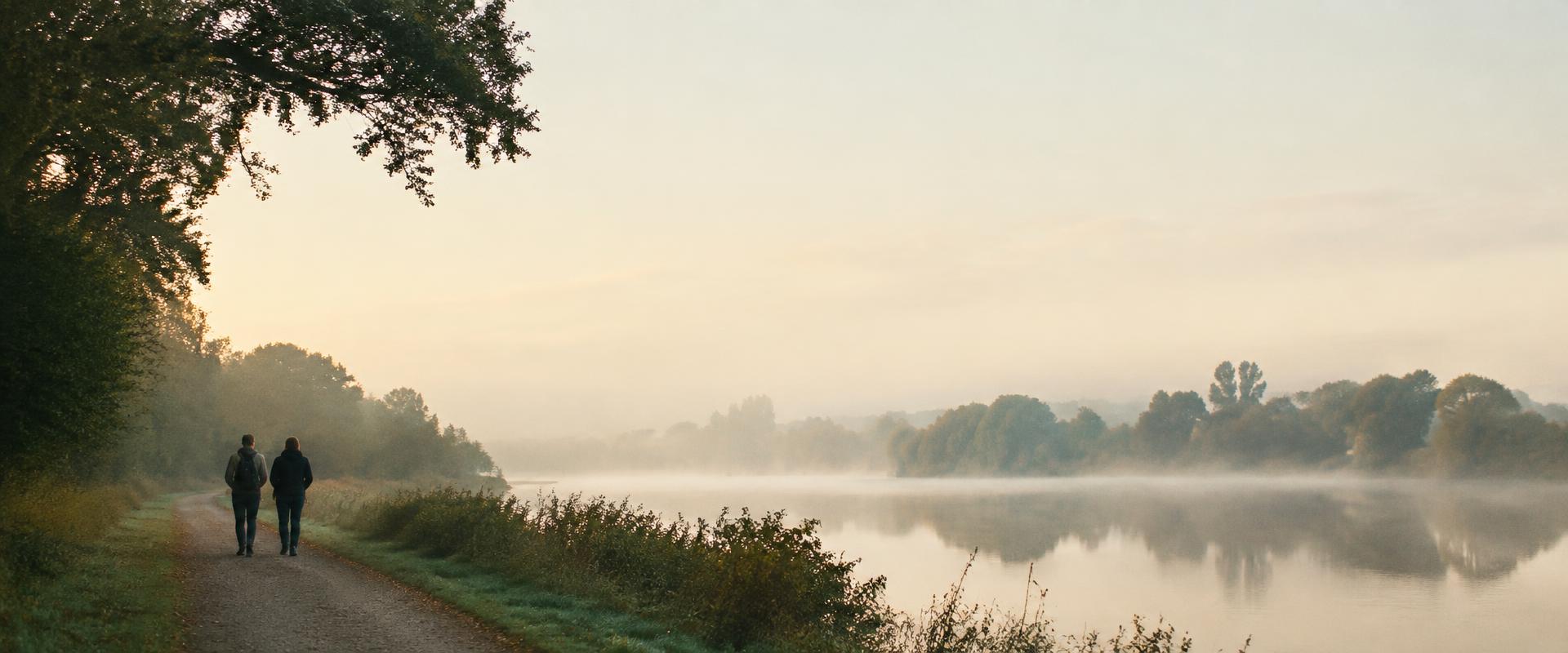
Two people walking by a misty river at dawn

The truest account of an experience comes from the person who lived it. These are individual stories, shared with permission—not predictions of what treatment will do for you.

Restore · CFS/ME and chronic fatigue

Nick H.

Restore · Migraine and long Covid

Jade

Restore · Migraine

Josh, 42

Optimise · Cognitive performance

Greg S.

Restore · Depression

A., 42

Restore · Chronic fatigue after Covid

O., 26

Restore · Chronic pain and fatigue, EDS and PoTS

L., 31

Before he got ill, Nick was fit and active. He ran regularly, had a busy home and social life, and a career that mattered to him. Then, at 49, it stopped. It came on suddenly, and at his lowest he could not get to the bathroom without help. For the ten years that followed, he was completely housebound or bedbound for around 75% of the time.

What followed was ten years of looking for answers: cardiologists, endocrinologists and psychiatrists first, and then, when those led nowhere, retreats, healers and functional medicine, and many more. He estimates he spent close to £350,000 trying to find something that worked.

A close friend told him about Naya after reading about it in the Telegraph. It felt different from the start. The process was open, with the data and evidence there in front of him, and the team worked around him on the days he was too unwell to come in. He came in hoping for a fifteen per cent improvement, and would have taken it.

His rTMS programme was twenty sessions. For the first sixteen he noticed nothing, and kept going anyway. At around session seventeen, things started to change. The pain he had lived with for ten years began to ease, and it stayed that way. Since finishing, Nick has barely had a day in bed. He now walks roughly 6,000 steps a day, up from being bedbound and barely able to get around the block. He walked three miles recently, which he had not managed in a decade, and his heart rate variability, a marker of the nervous system settling, has risen in line with how he feels. He also took his family to Corfu, the first proper holiday they had managed together in years. Crashes still happen, but they are less intense than before, and he is able to live his life again.

In their words

“This has been a game changer. A rapid game changer. What fires together wires together: it changed the neural pathway, and enabled my system to operate again. I urge anyone who recognises this story to pick up the phone.”

Every person responds differently to rTMS, and Nick’s experience is his own. His story is not a promise of the same outcome for everyone, but it is a real and honest account of the difference it made for him.

Jade lives with migraine and long Covid, and shares her experience on her own YouTube channel. Her video follows her whole journey through treatment at Naya, from first appointment to finishing her rTMS course. It is her own independent account, made on her channel rather than by us.

In their words

“I tried brain stimulation for chronic pain. Here's what happened.”

Every person responds differently to rTMS. Jade's experience is her own, shared with her permission, and is not a promise of the same outcome for everyone.

Josh is 42, with a busy life and a lot on his plate. His migraines had worsened over time, driven by grief, stress and the pace of everything else, and they came with a cluster of other symptoms: near-constant dizziness and tinnitus, and, over time, a deep fatigue. An ENT assessment raised the possibility of vestibular migraine. By the time he came to Naya, it had all taken a real toll.

He completed an initial course of thirty rTMS sessions. He found the treatment itself relaxing, and one shift came almost immediately. After the very first session, a heaviness he had carried for years, a constant sense of impending disaster he had come to think of as normal life, began to lift, and it stayed lifted throughout.

Where the treatment made its biggest difference was in his resilience. His fatigue eased, and his ability to absorb stress and recover from it grew. That shift rippled outward: even the symptoms rTMS did not directly change, his dizziness and tinnitus, became easier to live with, because he was meeting them from a steadier, less depleted place. He is able to do more, and it came, as he puts it, at a time when he was really struggling.

30rTMS sessions in his first course
Session 1When a long-held heaviness began to lift

In their words

“The sense of impending disaster that I thought was normal life has lifted. It came at a time when I was really struggling, which has been really great. The team at Naya have been helpful, understanding, and easy to talk to.”

Every person responds differently to rTMS, and Josh’s experience is his own. His story is not a promise of the same outcome, but a real account of the difference it made for him.

Greg is Chief Executive of IP Group, the FTSE-listed company that turns university research into multi-billion-pound businesses. In any given week he is weighing a computational biology compound, chairing a board through a refinancing, and drawing signal from a two-hundred-page due diligence pack. He is also an ultramarathoner and a father of three. He had, in other words, measured and optimised almost everything: training load, recovery, sleep, nutrition, bloodwork. One variable remained in the dark, and it was the one that decides where the capital goes.

The cognitive layer, the asset that drives every decision he makes, was the input he was managing on instinct. He came to Naya to stop guessing. His optimise protocol was brief and precise: five sessions of rTMS, three minutes of stimulation each, mapped to his NayaScore™ baseline and measured objectively before and after.

The changes showed up where they matter most for the work he does. His attention moved from the 62nd to the 89th percentile. His capacity for planning, the ability to think several moves ahead before committing, rose by twenty points. His response inhibition, the pause that lets a considered answer land ahead of a reflexive one, strengthened further still. The gains appeared in the second half of the programme, in the pattern the neuroscience predicts rather than the one practice would produce.

62nd → 89thAttention percentile
70th → 90thPlanning percentile
86th → 93rdResponse inhibition percentile
15 minTotal stimulation time over 5 sessions

In their words

“I apply rigour to every performance variable I can measure. But my brain, the asset that drives every decision I make at work, was always a blind spot. You could feel sharper or slower; you couldn’t quantify it. Naya was the first time that changed.”

Greg’s results are his own, measured over a short series in which practice effects cannot be entirely excluded. Of twelve areas measured, three improved, eight held steady and one dipped slightly. They are not a typical outcome, but an honest account of what precise, measured work on cognitive performance can reveal.

Read the full case study (PDF)

A. is 42, a former banker and the mother of a young child. She moved to London for work and spent years in banking, with long hours and relentless pressure. By the time she came to us she was living with depression, and she believes those years of stress had thrown her nervous system off balance.

We used low-frequency stimulation over the right dorsolateral prefrontal cortex, located precisely with a standard scalp measurement, and calibrated to her own brain. She had 10 sessions in her first course, and several weeks later chose to come back for 5 more so she could taper off gradually.

Within those first 10 sessions, she told us she felt as though she had her life back. We track depression using the PHQ-9, a standard clinical questionnaire scored from 0 to 27. By the end of treatment her score was 0.

0 / 27PHQ-9 depression score at the end of treatment
10 + 5Sessions, then a gradual taper

In their words

“My rTMS treatment has been extremely helpful in getting my health back, and the whole experience felt very personalised. Abigail made me feel at ease from the start. She was incredibly supportive, knowledgeable, and genuinely cared about my progress throughout.”

Every person responds differently to rTMS. A.'s experience is her own, shared with her written permission, and is not a promise of the same outcome for everyone.

O. is 26 and a political consultant. He used to compete in triathlons. After Covid, he could no longer manage basic exercise. The fatigue came in waves, and when we talked it through, he could see that his flare-ups often followed periods of stress at work.

He had 30 rTMS sessions spread over two months, using low-frequency stimulation over the right dorsolateral prefrontal cortex, a part of the brain involved in regulating mood and the stress response, with the dose calibrated to his own brain.

His recovery did not run in a straight line, and we think that is worth showing. After 10 sessions there was a small improvement, then an unrelated illness set him back. Mid-course, a heatwave and hay fever slowed his progress. At session 19 he went for a run, the first he had managed since becoming ill. By session 30 he was taking part in sport and exercise again. The dips did not vanish entirely, but they came less often and hit less hard.

30rTMS sessions over two months
Session 19His first run since becoming ill

In their words

“He told us he felt better able to handle stress, and more resilient when a low patch did arrive.”

Every person responds differently to rTMS. O.'s experience is his own, shared with his written permission, and is not a promise of the same outcome for everyone.

L. is 31 and a psychotherapist. She spends her working days helping other people carry difficult things, and she was carrying a lot herself: Ehlers-Danlos syndrome (EDS) and PoTS had left her with chronic pain, persistent fatigue, frequent headaches and a stubborn ache through her neck and shoulders.

The idea of TMS felt daunting at first. The team explained each step before it happened, and we measured her progress as we went, using blood tests and heart rate variability (HRV) tracking. Her plan had two parts: 30 sessions of rTMS for her fatigue and pain, and 4 to 5 sessions of pMS (peripheral magnetic stimulation, which works directly on the nerves and muscles of a painful area) for her neck and shoulders.

She felt a difference before the course was finished. Midway through, she was already noticing less pain and more energy. By the end she reported a significant improvement in her chronic fatigue and pain, a significant reduction in headaches, and a significant reduction in her neck and shoulder pain.

30rTMS sessions for fatigue and pain
4–5pMS sessions for neck and shoulders

In their words

“The team is always caring, professional, and supportive throughout. Everything was explained clearly, and the use of measures such as blood tests and HRV tracking gave me confidence in the process. The team made what initially felt like a daunting experience feel safe and manageable. I would highly recommend them.”

Every person responds differently to rTMS. L.'s experience is her own, shared with her written permission, and is not a promise of the same outcome for everyone.

What happens next

A plan that starts with you.

  1. Step 1: Start with a conversation

    A free 30-minute call. No commitment.

  2. Step 2: Understand what is right for you

    Your history, goals and a NayaScore™ baseline.

  3. Step 3: Agree a personal plan

    Clear sessions, costs and timings before you decide.

  4. Step 4: Review progress together

    See what has changed, and agree next steps.

A conversation, not a commitment

You don’t need all the answers.
Let’s start with a call.

Book a free discovery call Free · no obligation